I don't photograph things. I photograph a way of seeing them.
A sense of beauty was instilled in me early — a Kodak Brownie first showed me the world could be held with a single click. Photography became my life's work, in one form or another — but it was not until 2001 that I turned to it as a fine art. By then the way I see had long been set, and set permanently.
I served as a Marine Corps infantryman in Vietnam. After surviving a four-hour firefight, I stepped on a booby trap. In an instant it took my left leg and, for a few minutes, took me out of my body entirely — into a black emptiness holding nothing but a single point of light and one pure harmonic sound. There was no pain, no distraction, no self; only that light, and the pull to reach it. The harder I reached, the further it withdrew — until I realized I was thinking, and thinking brought me back to the mud and the battlefield. Lying there, before I had opened my eyes to see what I'd lost, I made two decisions I have never let go of: that I was alive, and that I would live fully, and disability was not in my vocabulary.
It was the most beautiful thing I have ever witnessed, and I have been chasing light ever since. Not the literal light of that moment — it is gone — but its equivalent, in a reflection, a face, a flower, a street. The more directly I reach for it, the further it retreats, so I keep circling it, one collection at a time.
Because ordinary representation rarely holds that feeling, my work drifts to the fringes of the medium — impressionism, abstraction, pointillism, symmetry. Each collection is built around a single visual framework that asks the same quiet question: How should I interpret this? That question is the point — it turns your attention away from the medium and toward the seeing itself. I know the image I am after before I release the shutter; what I am truly after is the light that reveals it, and the feeling of seeing it clearly.
If this work has a home, it is Equivalence — Stieglitz's Equivalents, carried forward by Minor White — the photograph standing not for the thing it shows but for the beauty each viewer discovers in it.
I don't want you to name what you're looking at. I want you to feel it first.
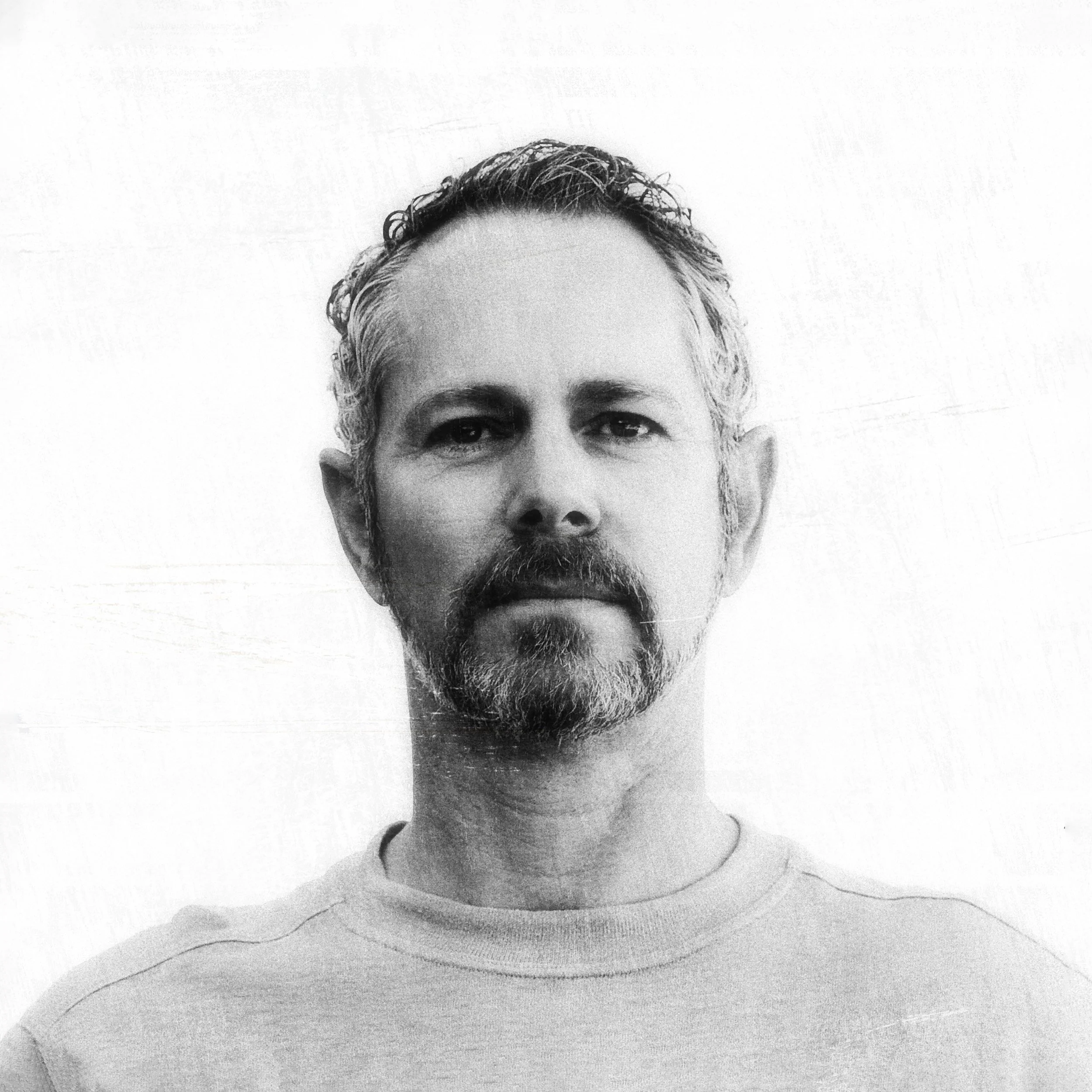
Biography
Ken Holden studied motion-picture production — cinematography and still photography — and built a professional career in photolithography, developing the advanced imaging processes used to manufacture computer chips. He turned to fine-art photography in 2001. In 2010 he was an Artist in Residence at the de Young, Fine Arts Museums of San Francisco, where his work was also exhibited; his photographs have since been shown at Stanford University Art Spaces and the Art Museums of Los Gatos, and featured in Camera Arts and Installation magazines. From 2014 to 2020 he stepped away to care for an elderly parent at home, returning to his fine-art photography in 2020 and pursuing it fully since. He works across ten collections and lives in Georgia.
Selected Exhibitions — 2010 Visual Interpretations in Photography, de Young, Fine Arts Museums of San Francisco (solo) · 2013 & 2010 Photographic Impressionism, Stanford University Art Spaces (Center for Longevity) · 2009 Elusive Impressions, Art Museums of Los Gatos · 2010 Abstraction in Photography, The Vermont Photography Workplace, Middlebury, VT · 2023 B&W Group Exhibit, Alpharetta Arts Center, Alpharetta, GA
Artist in Residence — 2010, de Young, Fine Arts Museums of San Francisco
Publications — 2013 Installation Magazine, "Photographic Impressionism and Ken Holden" · 2010 Convozine, "Being Here Now" · 2007 Camera Arts Magazine, "Liquid Flowers," May/June, pp. 18–21
Lecture — 2010 Impressionism: Game Changers & Boundary Breakers, de Young / ArtPoint / Commonwealth Club of San Francisco (live public-radio broadcast)